Get In Touch
Every great partnership starts with a conversation.
Every great partnership starts with a conversation.

CONTACTS
Plot 16, Bayan Lepas Technoplex, Industrial Zone Phase 4, 11900 Bayan Lepas, Penang, Malaysia.

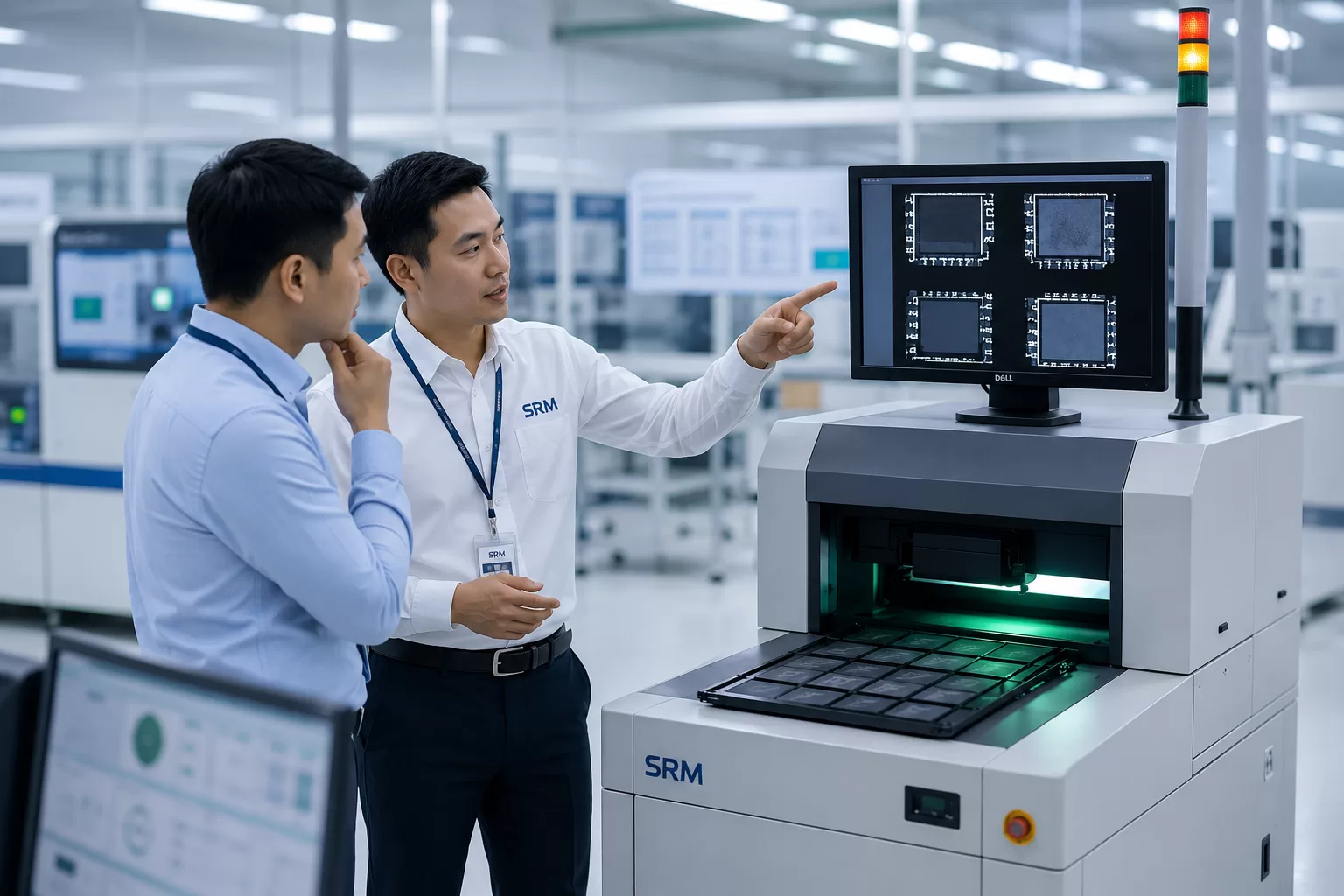
Semiconductor manufacturing in Malaysia has evolved into a high-precision, high-volume industry where quality and efficiency are paramount. As integrated circuits (ICs) become more complex and production scales up, implementing robust vision inspection systems is essential for ensuring product reliability and minimizing defects. Leveraging sophisticated vision inspection technology not only enhances quality assurance but also supports the automation and throughput requirements of modern semiconductor facilities.
Vision inspection systems are integral to back-end semiconductor solutions, especially during the final stages of production. These systems use advanced cameras, lighting, and AI-driven algorithms to detect a range of defects—including surface cracks, misalignment, warpage, solder issues, and micro-contaminants—on IC packages and wafers. In Malaysia’s fast-growing semiconductor sector, where high-speed handlers such as turret and pick & place handlers are common, integrating vision inspection directly into automated production lines is now considered best practice.
Vision inspection not only supports quality control but also enables traceability, compliance with industry standards, and reduction in manual inspection errors. By partnering with experienced solution providers, manufacturers can tailor inspection capabilities to specific IC package types and production throughput targets.
Before introducing a vision inspection machine into a Malaysian semiconductor facility, several factors must be assessed:
Successful implementation of vision inspection in semiconductor manufacturing requires careful planning and collaboration between process engineers, quality teams, and equipment suppliers. Here are best practices for effective deployment:
Malaysian semiconductor companies often face challenges when integrating new vision inspection systems:
When implemented following best practices, vision inspection delivers measurable advantages for semiconductor manufacturers:
The next wave of innovation in vision inspection Malaysia is driven by artificial intelligence, deep learning, and enhanced multi-sided inspection. AI-enabled systems can identify subtle defects and adapt to new package designs with minimal reprogramming. In addition, the integration of vision inspection with advanced handlers (such as KGD handlers, auto reel changers, and magazine-to-tray systems) is enabling true end-to-end automation in high-volume Malaysian semiconductor plants.
As the industry continues to expand, manufacturers investing in scalable, AI-powered vision inspection and automated handling solutions will be best positioned to achieve world-class quality, compliance, and operational efficiency.
Implementing a robust vision inspection system is essential for any Malaysian semiconductor manufacturer aiming for excellence in quality, throughput, and reliability. By assessing production needs, collaborating with experienced partners, and following proven best practices, companies can unlock the full benefits of automation and ensure their place in the global semiconductor supply chain.
Vision inspection systems enhance product quality by detecting defects early, increase throughput by automating inspection, ensure compliance with industry standards, and reduce costs related to rework and scrap.
Modern vision inspection machines can be integrated with handlers such as turret handlers, pick & place systems, and auto reel changers through standardized interfaces or custom engineering, ensuring seamless operation within automated production lines.
Manufacturers should evaluate throughput requirements, compatibility with current automation (handlers and reel changers), inspection criteria, scalability, environmental factors, and the provider’s experience in semiconductor back-end solutions.
AI-powered vision inspection enables more accurate defect detection, adapts to new IC package types, reduces false positives and negatives, and streamlines system tuning and parameter optimization.
Regular maintenance and calibration ensure consistent inspection accuracy, minimize unexpected downtime, and extend the lifespan of vision inspection equipment.
Ready to elevate your semiconductor manufacturing with state-of-the-art vision inspection and automated handling solutions? SRM Integration (Malaysia) Sdn Bhd offers a comprehensive portfolio of high-speed IC test handlers, turret and pick & place systems, AI-powered AOI, and customized automation tailored to your production needs. Partner with our proven engineering team to unlock higher quality, throughput, and reliability across your operations.