Get In Touch
Every great partnership starts with a conversation.
Every great partnership starts with a conversation.

CONTACTS
Plot 16, Bayan Lepas Technoplex, Industrial Zone Phase 4, 11900 Bayan Lepas, Penang, Malaysia.

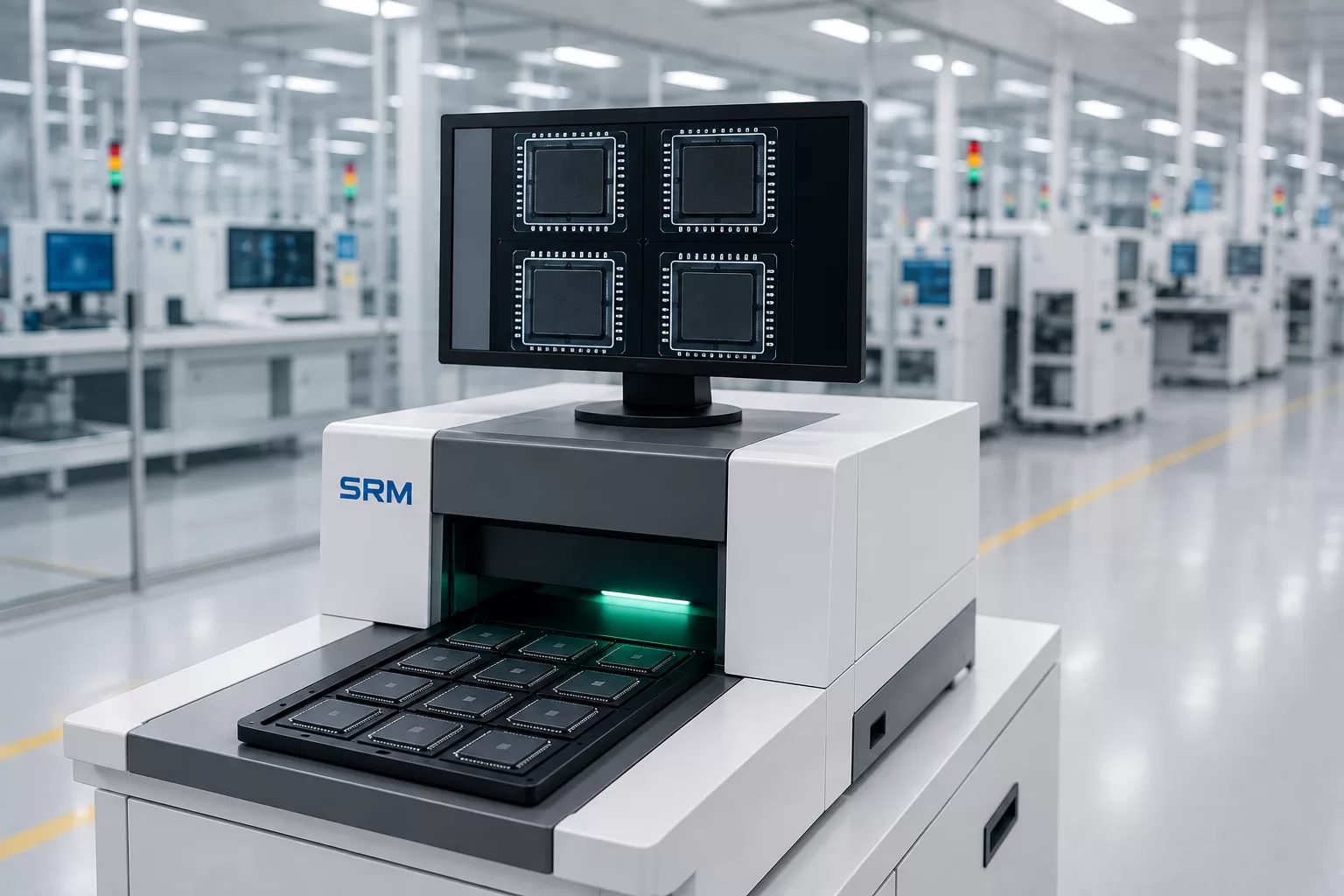
Selecting a back-end semiconductor solution involves more than choosing individual machines. Manufacturers need to consider how handling, inspection, testing, sorting and material flow work together across the production process.
For IDMs, OSATs and semiconductor manufacturers, the right solution should support current production requirements while providing the flexibility, reliability and automation needed as device and volume requirements change.
Use the following checklist when evaluating an automation solution for semiconductor back-end operations.
Start with the devices and production processes the system will handle. Consider package types, device dimensions, input formats, output requirements and expected production volume.
The solution should be compatible with your current device mix without creating unnecessary handling steps or manual intervention.
Different production environments require different handling approaches. Check whether the supplier offers suitable technologies for your applications, including turret handlers, pick-and-place systems and KGD handling.
Input and output flexibility is also important when production involves different formats such as bowls, tubes, JEDEC trays, magazines or film frames.
Inspection should be considered as part of the overall production flow, particularly where defects need to be identified automatically during handling.
Look for inspection capabilities that match your actual quality requirements, including package condition, alignment, soldering and other application-specific characteristics. Integrated inspection can also reduce the need for separate inspection stages.
For applications requiring automated multi-sided inspection, SRM’s 6-AOi handler combines automated handling with six-sided AOI capabilities.
Evaluate how much manual intervention is required throughout the process.
Automated material handling can help maintain consistent production flow and reduce interruptions caused by manual loading, unloading or material changes. This is particularly relevant for high-volume operations where small interruptions can accumulate into significant downtime.
A new solution should fit into the existing production environment rather than operate as a standalone system.
Before implementation, assess equipment interfaces, device transfer, communication requirements, floor-space constraints and the interaction between handling, inspection and testing equipment.
Early integration planning can help identify potential bottlenecks before equipment is deployed.
Production equipment must deliver consistent performance over extended operating periods.
Ask about mechanical reliability, preventive maintenance requirements, access to replacement parts and the supplier’s engineering support. A system that is difficult to maintain can create unnecessary downtime even when its initial performance is satisfactory.
Production requirements can change as new packages, devices or volumes are introduced.
Consider whether the solution can accommodate future changes through additional automation, different handling configurations or application-specific modifications. Choosing a scalable platform can reduce the need for major equipment changes later.
Not every semiconductor production line can use an off-the-shelf configuration.
A capable equipment supplier should be able to understand the application, identify integration requirements and provide engineering support where customization is necessary. This is particularly important when existing equipment or unique production workflows need to be accommodated.
Before selecting a back-end semiconductor solution, ask:
Evaluating these factors together provides a more realistic picture of whether a solution is suitable for the production environment.
Back-end semiconductor production involves multiple connected processes. A highly capable individual machine cannot compensate for inefficiencies elsewhere in the production flow.
For this reason, manufacturers should evaluate handling, inspection, automation and integration as parts of the same production system. The objective is not simply to purchase equipment, but to establish a reliable workflow that supports consistent quality and efficient operation.
The right back-end semiconductor solution should match the manufacturer’s devices, production workflow and future requirements. By assessing compatibility, automation, inspection, integration, reliability and engineering support together, manufacturers can make a more informed equipment decision.
For semiconductor manufacturers looking for integrated automation capabilities, SRM Integration provides solutions covering IC handling, KGD handling, automated reel changing and six-sided AOI inspection.
Start with device compatibility, production requirements, handling formats, inspection needs and integration with existing equipment. Also evaluate maintenance, engineering support and whether the solution can accommodate future production changes.
Not always. When inspection forms part of an automated production line, its cycle time, device transfer and data flow should be evaluated together with the handling system to avoid process bottlenecks.
Production lines can have different device types, equipment interfaces and workflow requirements. Customization allows automation to be adapted to the actual application instead of forcing the production process to fit a standard configuration.
Look beyond the equipment itself. Ask about application evaluation, integration experience, customization capabilities, commissioning support, maintenance and after-sales engineering assistance.
A scalable solution can accommodate changes in device types, production volume or automation requirements without requiring a complete replacement of the production system. The appropriate approach depends on the equipment architecture and application.